Showing posts with label Soccer Coaching. Show all posts

Wednesday, 15 October 2014

GEGENPRESSING – IS IT THE WINNING FORMULA?


Following the overwhelming impact that the ‘tiki-taka’ style has had on football in recent years with the rise of Spanish football with the national side winning 3 major international tournaments back to back and the fantastic record of Barcelona, the “antidote” to tiki-taka appears to have manifested itself in the form of “gegenpressing”.

With more available and authoritative observations and comments on the game these days including pretty sophisticated analyses of strategy and tactics via the internet, more coaches, at every level of the game, are exposed to many opportunities to be able to understand the game better.

However, the game is the game, notwithstanding some key changes or adaptations we have seen over the years (better pitches, re-interpretation of the offside law and a significant change to the back pass rule).

That being the case and the fact that the Principles of Play for territorial, or invasion, games remain constant, I wanted to explore some ideas about the new approach of “Gegenpressing”, or counter-pressing, made popular in recent seasons by Borussia Dortmund and latterly Bayern Munich, especially and elements of which can be detected in the “tiki-taka” approach when possession is lost and for which preparation is made when they still have the ball.

HOW DOES GEGENPRESSING WORK?

There are a couple of decent explanations around on the internet and I have extracted detail below, with credit to the sites from which they were obtained.

WHAT IS “GEGENPRESSING”?

Well, depending on which website you read (see references below) it is:

a rather simple tactical approach: A team simply plays at full pace for 90 minutes, approaching every moment as though they are down a goal late in a major final. After losing possession, players will swarm their opponents, giving them no time on the ball regardless of position and location”

And then, having won the ball “always look for the opportunity to counterattack, playing the ball forward immediately and sprinting into open space as opponents shift from attack to defense”


OR

How Gegenpressing Works

Gegenpressing differs from Barcelona's approach of pressing teams as high up the pitch as possible by incorporating a defensive as well as attacking element, which involves the whole team pressing aggressively in unison. Gegenpressing is a highly-organised approach to regaining possession and minimising space for the opposition. Dortmund's opponents are rapidly closed down by well-rehearsed, co-ordinated pressing movements, often by two or more players, allied with intelligent positioning to restrict space for players to pass and move into.

The best moment to win the ball is immediately after your team just lost it. The opponent is still looking for orientation where to pass the ball." Once Dortmund have regained possession, the transition from defence to attack is organised and, potentially, explosive.

Gegenpressing is used to capitalise on Dortmund’s ability to execute extremely quick transitions, moving the ball up the field as fast as possible.

Ultra-Fast Transitions

Klopp knows only too well that any tactical approach, including gegenpressing, won't bring success without sheer hard work


FROM Matt Whitehouse’s new book “UNIVERSALITY – The Blueprint for Soccer’s New Era
 

“It was Jürgen Klopp at Dortmund who developed and executed the ‘counter pressing’ tactic to great effect. Klopp would work on the defensive organization of his side to nullify space behind the defence as well as making it difficult to play between them. Dropping his forwards off to a point 10 yards ahead of the halfway line, he would allow the opposition to have the ball in their defensive third, the aim being to draw the opposition into the mid-third and then to pounce with frightening speed and intensity in order to win the ball back and counter.


This compact mid-block meant there was a lack of space for the opposition to penetrate through and behind. Setting out in a 4-4-1-1 formation the team would make a strong defensive block which was tough for sides to break down and penetrate through. Of course the aim was to draw the opposition in, win the ball back and transition with frightening speed. Dortmund’s counter attacks were truly incredible to watch.


Their ability and dynamism to press when out of possession is central to the success of the tactic. It was not about winning the ball but being able to force the play, contain the opposition, and force errors.”


STRATEGY, TACTICS & DECISIONS

Some of this sounds very straightforward and simple but actually requires high levels of coaching and attention to detail in order that players recognise which passing lines to close off (whilst sometimes leaving others deliberately open to set ‘traps’ for the opponents to pass into) and what to do ‘in transition’ when having won the ball.

Playing forward again sounds simple but, where, to whom, to which runner? In one pass, or two? Direct or deliberately indirect to entice now recovering defenders into the ‘wrong’ areas?

So, there are a number of elements, all of which are around the Principles of Play (attack and defence) but involve reasonably sophisticated tactics and strategy with the ability to understand the situation in the game and to also plan ahead, not just reacting to what happens, but by taking a pro-active approach to what happens when we lose and regain possession of the ball, or vice versa.


A MODERN APPROACH

It all sounds very modern. Or does it?


I thought I recognised some really key points in a book from almost 25 years ago written and researched by the, since, much derided former FA Director of Coaching and Education, Charles Hughes.

That book, The Winning Formula and elements from it are re-visited here. I have retained page numbers for ease of reference and passages from the book are shown is quotation marks. My intention in retaining page numbers is to demonstrate that the references are not isolated but are consistent messages throughout the book. Where there are words in brackets, they are my additional comments and/or interpretations.

THE WINNING FORMULA

Page 8 - INTRODUCTION

“Modern football has fewer goals, shots at goal and goal mouth incidents – everything that produces excitement” (for players and spectators. I am not so sure that these statistics are still valid but I will leave that particular analysis for another time. Certainly some of Hughes’ statistical analysis has been shown, more recently, to be flawed. However, some commentators and fans began to describe tiki-taka as ‘boring’ – not me, I hasten to add! ).


“The reason for this is not in new efficient defensive strategies, so much as misguided attacking strategy, that of possession football”

(This would seem to have modern relevance to one of the frustrations of tiki-taka, that of constricting the very space that you seek to exploit by retaining and advancing the ball relatively slowly up the field which in turn allows the defending team to funnel back and present a ‘deep block’ – think of Chelsea in their CL winning season)


“Those who believe in possession football argue that a team without the ball cannot score and that the team which keeps the ball for long periods is more likely to score.” (Part of the philosophy of Tiki-Taka is ‘resting with the ball’ and certainly possession of the ball is seen as having defensive value as well as offensive value)


“As a general rule, in soccer, time is on the side of the defender allowing the team to recover and re-group and re-organise.”

(I would suggest that this is still the case, as a general principle, although I do accept that manipulation of the ball in order to manipulate the opposition into errors of judgment and tempting defenders into areas of the field in order to exploit other areas, does, necessarily take time to construct within the game.)


“To point out the flaw in possession play is NOT an endorsement of kick and rush tactics with the ball being punted in the general direction of the opponents’ penalty area at every opportunity.”

(This significant comment is one that utterly refutes, in my humble opinion, the popular interpretation that ‘Direct Play’ was about forcing the ball forward to construct knockdowns for second balls. Certainly that WAS how it was interpreted, by some coaches/managers, but is not what was intended, I believe, from the approach suggested by this book.)


“Success comes, as might be expected, in a balance between the EXTREMES of possession play and kick and rush.”


“DIRECT PLAY involves moving the ball forward in a CONTROLLED WAY”


PAGE 9

“The simple fact is that teams are at their most vulnerable at the moment they lose possession of the ball”

(This observation seems consistent with both the Tiki-Taka and Gegenpressing approaches – KNOW that the opposition will lose the ball to you and be prepared to take action to exploit the transition. Know also that the opposition will also be vulnerable when you lose the ball to THEM as they seek to take advantage and break from defending compactness to an attacking dispersal.)


“The Winning Formula is concerned with seizing the initiative and then retaining it by playing to a system (process?) which gives the best percentage chance of winning matches.”

However, ”The Winning Formula is not a substitute for good technique” (skill)

(As per my comment above – Gegenpressing is about seizing the initiative through assertive pressing and having, as a first option, to play forward, where possible, to exploit that initiative.)


PAGE 10 - Passing and Support Play


“Passing is not just about technique. It is about UNDERSTANDING – what is required and what is possible” (both tactically and technically, is the point here. So, not just biffing the ball forward but making deliberate decisions based upon the possibilities available when having won the ball. Again, Gegenpressing is based on rehearsed understanding of what to do in given situations and prompted by key ‘triggers’ – actions by the opponents recognised, acted upon and exploited by the pressing team).


From The Winning Formula, set priorities allow a structure from which to play. These elements are self-explanatory and are very similar to the assertiveness of Gegenpressing and, even, elements of Tiki-Taka in the transition from possession to loss of possession – the ‘6 second press’ implemented by Guardiola.


“Priorities – Play forward” (What is now sometimes referred to as “Verticality”)

4 options – Shot, Dribble, Run, Pass


“Pass – Space beyond defenders for well placed forward players to exploit

            To feet of most advanced player

            Beyond at least one defender

            Switch play

            Back to supporting players”

 
(Forward play/passing is stated as a first option because defenders may be unbalanced as they were contributing to the attack when possession was lost. Again, this is NOT about biffing the ball forward as a hopeful kick – it is about  dribbling, running with or passing the ball, with considered intent.)


“Support – Angle, speed and distance

Different types of ‘runs’ (movement) to exploit possession”


PAGE 98 - WINNING THE BALL

“It is a vital part of The Winning Formula that players in forward positions must contribute as much to regaining possession as those players in defensive positions”

(Again, with gegenpressing, it is a considered approach by a collective; not individuals running willy-nilly but, as mentioned above, working from key cues as to where and when to press and, indeed, when not to.)


From The Winning Formula, several key elements are identified in terms of an approach to playing the game:

“Key- Concentration” (mentally and with numbers)

 
“Adopt a compact shape. Short distances between players. Keeps opponents under constant pressure and forces errors”


“Increase momentum, not slow it, when regaining possession.” (Remember forward play as first option when defenders may be “out of balance” [modern parlance]. The reference to short distances, in order to exert early and combined pressure, is a feature of gegenpressing as well as Tiki-Taka, as mentioned earlier. It starts to become apparent that gegenpressing and Tiki-Taka are not necessarily opposites of each other, more a derivation, evolution or even a re-interpretation of consistent elements.)


P122 - KEY FACTORS IN DEFENDING

“Players should remember that defending is the first stage in launching an attack”

(Consistent with both Tiki-Taka and gegenpressing – a means to recover possession of the ball which we need if we are to score !)


“…there is a belief that rules of attack and defence are determined by the player’s customary position on the field of play. This is a mistake”


“The crucial factor is possession of the ball.” (as to what determines whether you are an attacker or a defender)


“It is an essential part of The Winning Formula that as soon as their side loses possession, every player should start to think defensively.

That is, they should be working to get the ball back.” 

(Whether that is by pressuring, covering and cutting off passing options / lanes and opportunities to switch play. Sounds VERY much to me like Gegenpressing ! …oh, and Tiki-Taka.)


P 123 - “PRESSURE

Restrict time and space by pressuring/challenging.”

(NB Recovery lines to challenge – do not ‘over-recover’)

“Provide close cover for the challenging player.

Occupy important space goal side of the ball” (Including preventing passing opportunities or even ‘allowing’ some to create ‘traps’ from which to win the ball and counter attack)


“Maintain compactness and try to avoid being stretched”


P174 - STRATEGIES

“The first step in creating a Winning Formula is to adopt the best strategies in both defence and attack.

In attack this means going forward as quickly as POSSIBLE” (based on understanding of the situation and with regard to the current options – see passing and support above)

“In defence it means attempting to win back the ball as soon as possible and as near to the opponents’ goal as possible.”


P184

“If a team is compact when the ball is lost it is possible to switch at once into a defensive strategy.

 A compact team can lose the ball but retain the initiative.”


P185 - “ESSENTIAL TECHNIQUES

“Strategy and tactics alone do not win football matches. Every player has to master a range of footballing techniques”


SUMMARY

In conclusion then, I have to say that I feel I can draw direct parallels between quite a few elements of gegenpressing from The Winning Formula and the recommended approach, especially, to defending and counter attacking, that are consistent even today.

NB Previous readers of my blog may have seen a previous post of mine about Charles Hughes but if not, you can link to it here: In Praise..or maybe Defence of, Charles Hughes

Friday, 25 July 2014

THE “BLAZERS”


I was prompted to write this piece after having seen a comment on the internet about the “FA Blazers” not being football people.
To my mind there has been a consistent criticism and denigration of large swathes of people involved in football, whether paid or volunteers and I just wanted to offer an alternate view.


By doing so, I am not for one instant suggesting that “The FA” (or rather people involved in operating it) are above, or immune from, criticism. No-one gets everything right all the time but there is a great deal of good work going on by excellent people and I hope by offering this, we will ultimately see a more balanced view than the populist and tabloid media view of affairs.
DINOSAURS / AMATEURS
An oft levelled insult, but what does this mean, really?


The phrase ‘Dinosaurs’ tends to be taken as meaning out of time, a remnant of a time gone by when, by most rules of natural selection, would have seen them as extinct by now.


People described as dinosaurs tend to be thought of as wizened older people with an historical view of reality.  But as Richard Pryor once said ‘You don’t get to be old, by being a fool !’


In our society we seem to assume that ‘old’ means ‘stupid’ whereas other societies tend to regard age as bringing wisdom and experience.


With reference to the term ‘Amateurs’ that tends to bring a meaning that individuals are callow and uneducated and lacking in knowledge about a pursuit (whatever that pursuit is).
However, really, amateur merely means unpaid. A lot of people involved in sport are amateurs. Does that mean they have no value?


“Volunteers are unpaid, not because they are useless, but because they are PRICELESS” – Darren Moss, Norfolk County FA, 2012  ( @DazMossy )
“Dinosaurs”, really, is nothing to do with age and everything to do with mind-set.
 I have come across some really progressive and modern, open-minded individuals who are relatively advanced in years. Equally, I have come across some closed minded individuals in their 20s and 30s.


So far as the term ‘amateurs’ is concerned, some of the volunteers that make up county FA representation on the FA Council are absolutely nothing of the kind. They may not get paid for their current role but I know for a fact that many of them have run their own businesses, have held high ranking roles in major corporations with a lifetime of business experience behind them.


"FOOTBALL PEOPLE"
I know some who are or have been, Club Chair people, players, coaches, managers, referees, administrators, club secretaries and sponsors and owners of clubs at different levels in the game. Are these not, by definition, therefore, ‘Football People’?


 They have maturity, a wealth of knowledge, experience and, often, a lifetime in the game on which to call.
So please, news editors, bloggers, social media advocates and pub conversationalists, please consider that many individuals have a great and positive influence on and in our game, so let’s not stereotype in this way.


Perhaps this blog post is also prompted by my recognition that I am now reaching an age whereby I could also easily be regarded (by those who don’t know me) as a dinosaur, merely because of my age and appearance.
Hopefully, those that read this (very occasional) blog and follow me on Twitter will recognise that I am always seeking new ways to see things in and about the game and am always prepared to debate the issues of the day.


Comments are welcome

Sunday, 4 May 2014

WE ARE ALL ROLE MODELS


WHAT IS A ROLE MODEL?
The term role model generally means any "person who serves as an example; whose behaviour is emulated by others".
Other descriptions include:
A person whose behaviour, example or success is, or can be emulated by others, especially by young people
A person who someone admires and whose behaviour they try to copy

SURVEYS

The term first appeared in a research report of medical students carried out by Robert K. Merton, a distinguished American sociologist.


Merton suggested that individuals compare themselves with reference groups of people who occupy the social role to which the individual aspires.

Merton emphasised that, rather than a person assuming one role and one status, they have a status set within a social structure that has attached to it a whole set of expected behaviours.


According to a survey of teachers in the United Kingdom conducted in 2008 by the Association of Teachers and Lecturers young people frequently chose role models from celebrity or popular culture

CHOOSE TO BE A ROLE MODEL
A well-known ex-player and presenter on a national sports talk station, infamously perpetuates that professional players are not role models. That is not their job, nor is it one of the requirements of the position of professional player.
I strongly believe this is a flawed argument.
You can choose to act as a role model, or not. However, especially if you are in a position of influence or in the public eye, someone may deliberately, or sub-consciously, choose YOU as THEIR role model, whether or not you choose to ACT as a role model.
A PROFESSIONAL’S VIEW
When professional basketball player Charles Barkley stated in a commercial “I am not a role model”
Karl Malone of the Utah Jazz offered this simple response:
“We do not choose to be role models. We are chosen.”
Plato observed centuries ago that young people would imitate the behaviours of bad role models as readily as those of good role models
So, I believe that, as coaches and therefore directly in a position of at least some influence, it is important to recognise that we all have the ability to inspire those around us by demonstrating values that are more outwardly than inwardly focused.
We can do our part to make the world a better place, and to help and guide the players in our charge to be good and positive citizens through our daily actions. It is not only by what we say but more importantly by how we demonstrate positive behaviours that we hope will serve as an inspiration to others.
We can all be good role models when things are going well, but it is the behaviours we demonstrate and the adherence to our values and moral compass when things go less well that separate the GOOD role models from the role models.
5 Ways in which to ACT as a role model:
  • Be passionate (but controlled) about your area of expertise or interest and demonstrate inspirational behaviour
  • Develop and demonstrate a clear set of values (Integrity means doing the right thing even when no-one is watching !)
  • Show a commitment to community
  • Be selfless and show consideration for and acceptance of others
  • Demonstrate tenacity and an ability to overcome obstacles

“ No printed word, nor spoken plea can teach young minds what they should be.

Not all the books on all the shelves – but what the teachers are themselves.” -

Rudyard Kipling

Sources:


Thursday, 4 April 2013

KIDS’ FOOTBALL IS CHANGING


I hope by now that most people involved in Youth Football, at least, are aware of the changes to formats of youth football that are being phased in from 2013-14 season.

These changes were ratified by The FA in May 2012 following extensive research, consultation and listening to what the children said over a period of over two years, led by National Development Manager for Youth & Mini Soccer, Nick Levett (link to Nick's blog http://youthfootballdevelopment.blogspot.co.uk/ )

 If you aren’t sure about the details, have a look here where you will see links to documents, videos and booklets with all the information you need.
 
NEW FORMATS FOR YOUTH FOOTBALL.

Some of the main changes to kids’ football and possibly the most obvious are the changes to pitch and goal sizes but especially to the numbers of players on the field of play.

Contrary to some initial beliefs that the FA was trying to make soccer ‘non-competitive’, I think, in the main, it is now widely accepted that the FA is actually trying to make youth football and competition within it, child centred.

Whilst the smaller team sizes have well researched positive outcomes in terms of touches on the ball, shots, saves and simpler decision making and will help the development of players, I personally believe there are even more important considerations in the development of our young players.

The new formats will not, in isolation, allow our young players to develop apace and become world beating players as they reach maturity.

I strongly believe that the key to the development of a new breed of exciting player (at ALL levels of the game) are the coaches and, additionally, the parents of young players.
 
HOW COACHES AND PARENTS CAN HELP PLAYER DEVELOPMENT

The format changes to youth football will provide the platform to a change in the way we develop young players but the approach, attitude and mindset of those people with a significant influence over young players are the ones who will really facilitate the change towards more competent and exciting players.
 
FOOTBALL IS A SIMPLE GAME ?

The view that football is a simple game is, to my mind, a tad over simplistic in itself.

It is true that it is played to relatively few and simple rules and, consequently, is therefore relatively easy to understand, even for young or novice players.

Conversely though, it is extremely complex to play the game well and to any level of consistency.

I think it is recognised that football is what is described as a late developing sport, where male players are at their peak at around 27 years of age and female players perhaps a bit younger.
 
PATIENCE

That being the case, significant adults (parents and coaches, generally) have a key role to play in displaying extreme patience as young players develop and learn the game.

 Consider a player in possession of the ball in the midst of a game (whether in practice or a game against another team) and the complexity of their role.

They are, simultaneously, trying to:

·         Keep control of the ball

·         Advance the ball up or around the pitch whilst running or dribbling

·         Screen / keep the ball away from an immediate opponent

·         Look for a shot or pass

·         Deciding on the correct technique / skill to execute

·         Looking for a team mate to whom to pass

·         Deciding which team mate is free / the right person to whom to play the pass

·         Avoid opponents when shooting or passing

·         Execute the skill decided upon

 All of this whilst the football ‘picture’ is dynamically changing.

Each passing second of the game sees players, team mates and opponents, continually moving and therefore, the player’s activities and decision making mentioned above take on an additional level of complexity.

So, then, considering the degree of difficulty of a single player’s activity in a single action of the game it starts to become apparent that, especially at young ages, we must expect players to make mistakes as they learn to understand the game and to develop the skills to play it well.

MISTAKES

During practices and games players must be allowed to make mistakes without fear of criticism.

If players are not allowed to make mistakes they will play within their current ‘comfort zone’ and will not learn how to find new ways to solve football problems.

If players are taught to ‘get rid of it’ or ‘kick it out’ for fear of conceding a goal, they will never learn how to manipulate the ball under pressure, how to trick and dribble around an opponent when under pressure or how to combine with team mates in tight areas to retain possession and play around opponents to extricate themselves from difficult situations. All of which are skills I believe we recognise in continental teams, yet seem reluctant to praise in teams in which we have an interest

PLAYER DEVELOPMENT

 The game, against an opponent, though, is only one part of a player’s development.

 Practices should be designed to provide a learning outcome related to the Principles of Play (Principles of Attack and Principles of Defence) in a dynamic format.

 I am an advocate of the Teaching Games for Understanding approach (see previous post here ) where adapted small sided games allow players to ‘play’ whilst learning tactical skills related to the Principles of Play.

Line Drills (or ‘Constant’ practices) do not transfer to the game well, are quickly boring for young players and are soon accompanied by the plea “When can we have a GAME coach?”

Coaches should try to design part practices which allow small group practices where everyone is ‘playing’ with targets/goals or challenges for both attackers AND defenders (try not to have defenders just give the ball back when they win it – what do you want defenders to do when they win the ball in a game against an opponent? Keep it and become an attacker!).

Part practices can quickly be transferred to a larger small sided game with two teams without having to relay cones/discs.

Alternatively, from perhaps initially playing ‘the game’ after warm up, it can be broken down into a practice to teach the theme before moving back to a small sided game again (Whole-Part-Whole practice).

Small sided practices that are adaptations of the ‘big’ game are great for giving players lots of goes at something.

Having said all of that, of course, players must be given the chance to test their skills in ‘games’ too. If less well developed players are not given the opportunity to improve their game craft, their development will be restricted.

 For examples of game related practices, try to get or read a copy of the FA’s Future Game document which provides many templates for small games involving attack and defence.

DEVELOPMENT/GROWTH MINDSET

So coaches and parents of young players should try to develop a relaxed approach to games and practices involving young players.

Try to observe, recognise and celebrate (“Well done...”) improvements in game understanding and skills without concentrating on the score at the end of the game.

Goals are relatively infrequent occurrences in the game anyway compared to the number and type of passes, controlling touches, decisions, throws, saves, tackles, headers and so on.

 If practice has been designed over a period to develop players understanding of how, where, when and with whom to make a challenge or tackle, for example, when defending, try to set individual players targets to achieve regarding defending in a game.

Try to provide challenges for all players too, not just ‘the defenders’ by game position that week. How will midfield and attacking players defend when the team doesn’t have the ball? Do they actually have to win the ball to have defended appropriately?

Then, during the game itself, observe, record and praise successes where elements of defending that have been taught in practices have occurred in the game.

Players will gradually become more confident and competent as they are, appropriately, challenged based upon their age and ability.

If coaches and parents can view practice and games as learning opportunities where young players develop their understanding of the game and the skills to play it well, without overt pressure, we can all make a major contribution to player and game development.

It is the process of learning the game that is of utmost importance foryoung players rather than the game outcome.

Player development is a long term process and takes years, not weeks or months. Good coaches and positive parents can help accelerate and enhance that development by providing the right environment and encouragement to be exciting, problem solving and independently thinking players in an expansive game style.

There will be plenty of time when players reach maturity (past 21) where the winning will become the priority.

So, Kids’ Football IS Changing – but what is most important; the formats or the mind-sets? Or do they go hand in hand?

For a thought provoking view of growth or fixed mind sets, try to read a copy of “Mindset” by Dr. Carol Dweck
 
Please feel free to leave a comment

Sunday, 6 March 2011

In Praise of (or maybe Defence of…) Charles Hughes

Charles Hughes, former Director of Coaching at the Football Association, has long been attributed with and criticised for the introduction of the philosophy of “Direct Play” in football.

To people old enough to remember the phrase, it conjures up an image of “Route 1” football – a mental picture of a consistent barrage of long forward balls in the general direction of the opponent’s penalty box.

When the ball reached such areas, it was generally expected that a huge mountain of a centre forward would get their elbows out, lean in to defenders and try to get a flick on for a smaller man running forward into the penalty area to “gamble”.
If that didn’t work, then a box-to-box running midfielder would try to get on the end of the “second ball” – a situation where the ball was unsuccessfully cleared by the defender as a result of the aforementioned “attention” by the battering ram style centre forward. The midfielder would then try to get a shot at goal or create an opportunity for someone else.

Statistical analysis carried out by Hughes, at the top level of the game, tended to show that most goals were scored from moves involving 5 passes or less.

Potentially, this sole fact, taken out of context and adapted by some, led to a number of teams playing ‘biff-bash-fightball’ – an alleged strategy favoured by teams with limited resources and an even more limited imagination.


Now I don’t know Charles Hughes, personally, although I was in the room when he provided a brief introduction to the group when I undertook my Advanced Licence coaching course at Lilleshall in 1994. He seemed pleasant and unassuming enough.

I believe that, if you look at key statistical analysis from major tournaments (World Cup and UEFA Championships) his research and analysis of statistics is as valid today as it was when he did it.

MISREPRESENTATION ?


However, I feel that his work has been grossly misrepresented. His descriptions of direct play are NOT about biffing the ball in the general direction of the opposing penalty area - and he says as much in his book (The Winning Formula - 1990). On Page 8 in the Introduction he talks about the flaws in the theory of possession play as a general premise but goes on to say:

To point out this flaw is NOT an endorsement of kick and rush tactics, with the ball being punted forward in the general direction of the opponent’s penalty area at every opportunity.”

He elaborates by adding:

Success comes, as might be expected, in a balance of the extremes of possession play and kick and rush

To close on this aspect, he goes on to make the point starting on page 9 and going to page 10:

Some people see advocates of direct play as people who wish to sacrifice the fine skills and beauty of the game in order to win.

Critics of direct play say that it is all about playing long balls forward to the exclusion of all else.

This is simply untrue.

Certainly the ability to hit long, accurate forward passes is an essential weapon in the armoury of outstanding players, but so is the ability to control the ball, to turn with it, run with it, dribble with it and cross it; just as important is the ability to head or shoot for goal with accuracy, to say nothing of a wide range of defensive techniques. An outstanding player, in direct play, as in any other system, is one who has mastered all these techniques and who has the skill to know which technique to use in any and every situation.”


So, clearly NOT, in my opinion, an endorsement of what everyone assumes he was responsible for - “Route 1 Football”.

Whilst he looks closely at statistical analysis of games at the top level of the game (and again, in his book he asks what other industry in the world would determine its tactics and strategy without analysing relevant statistics) he also clearly states that without development of good technique( and ALL technique; not Just the ability to play a long pass), control, dribbling, turning, running with the ball, passing and an ability to create and then exploit space, you will not see any reward for your efforts (see above).

Sadly, in my opinion, a few professional managers and coaches hijacked his use of statistical analysis and thought 'Right, most goals come from 5 passes or less, so let's bash it forward, fight for it and perhaps we'll get a goal scoring opportunity from a regained possession (Again, I don't KNOW them personally, but that was my assessment of those tactics from some of those teams at that time - which was mostly a few years ago now).

Now you may think that there is some merit to that but I don't think you'll win too many championships that way (at senior level) and I can't imagine the players or paying spectators enjoying it too much.

Kids Football

Although in kids’ football, you still see some coaches / managers playing the big, strong, quick kid up front and having the less developed players smash it forward so he can score lots of goals.


On the subject of young players, in his “FA Book of Coaching Soccer Tactics and Skills” (1980 and reprinted in 87 which is when my copy is from) sometimes called “FACTS”, he says in chapter 1 regarding Systems Of Play on page 13:

Sadly, the backlash of all this is in the schools with the result that too great an emphasis has been placed not only on systems of play, but also on the playing of 11 a-side football.

The development of young players would be better served by playing small sided games. It would be even better served if school masters would dedicate themselves to the task of teaching techniques and developing those techniques by simple progressive practices, leading to small sided games and eventually, when the players are technically and physically equipped, ending in the 11 a-side game


This is all stuff we are told the FA doesn’t, or hasn’t until recently, done - which may well be the case but, if we have concentrated on trying to replicate, or maybe imitate (see my earlier blog post) the adult game, it definitely wasn’t Charles Hughes’ fault.

He goes on to say:

We should be persuading schoolmasters, and others who coach young players, of the importance of their task. Should they fail in their task, should the foundations be less than sure, then a soccer superstructure will fail to arise.”

So, this would seem to be advocating a similar approach to what the Dutch have been saying and doing for so long. Whilst we may not have been doing it so well at grassroots, I believe that education, the internet and so on is now driving an enlightened view and allowing grassroots coaches to be the coach they would like to be.

More on Statistical Analysis

I believe if you look at FIFA's stats, they will STILL show that most goals are scored from 5 passes or less and from set plays, so certainly his analysis is not null and void.

However, we now see from FIFA that there are statistics to show that most successful sides, whilst their goals come in, broadly, Hughes' view, they also show that those sides have more possession than their less successful rivals.

Are these mutually exclusive views? No, I don't think so. As someone in management once said 'There is no one right way'. So, extrapolating the theory, there surely is no one wrong way, either, certainly not Charles Hughes'.

To be fair, I don't think he was ever given a proper platform on which to expand on his ideas and I can only recall seeing him interviewed once.

The press castigated him and his views without, in my opinion, ever truly investigating the issues (would you have expected anything else from the “popular” press?).

Sadly he got absolutely no support from any quarter and I'm fairly confident that in any conversation which comes up, I'm the only person I know who actively sticks up for what he stood for (or, more accurately, what I believe he stood for).

Additionally, he was not the only person to analyse, statistically, the outcome of games and come up with the conclusions he did. A gentleman by the name of Wing Commander Charles Reep carried out his own analysis (before Hughes) and came up with broadly the same conclusions.

I firmly believe that as the years pass and the mindset against Mr Hughes subsides, his work will be re-assessed and he will be recognised for the student of the game and opinion former that I believe him to be.

ANOTHER VIEW

As I’ve said, I don’t know Charles Hughes and have never spoken with him although there are people who do and have. I have been told by a third party, who knows someone who worked with Charles Hughes for a while, that he was indeed a ‘long-ball’ merchant.

But having read my post above and the extracts from two of his books, I’ll leave you to make up your own minds and see the attached links for another view.

http://www.independent.co.uk/sport/profile-the-professor-breaks-cover-charles-hughes-1507161.html

http://www.telegraph.co.uk/sport/football/teams/england/2326576/England-managers-need-direction.html

Friday, 26 November 2010

IT'S NOT ABOUT GENETICS

The 10,000 Hours Rule

A little while ago, as a result of a reference to the book whilst attending one of the FA Youth Award courses, I bought the book “Outliers: The Story Of Success” by Malcolm Gladwell.


In the book, Gladwell observes attributes of successful people – in sport, business, and technology – and makes the connection between people with a determined approach to improvement and the coincidence of opportunity and circumstance.
He views aspects of culture, birth bias (which is examined in some detail in the Youth Awards) and the curious aspects of what makes one person a success whilst another lives an ordinary life.
He further explores the premise that to become an expert, in anything, it requires at least 10,000 hours of practice.

BOUNCE

I have recently started reading a book called “Bounce, How Champions are Made” written by broadcaster, journalist and ex-table tennis champion Matthew Syed.


Matthew also examines this 10,000 hour rule but focuses on what he describes as “Purposeful Practice”. In other words, practice designed, intended and determined to bring about specific improvement in performance, irrespective of whether it is football, music or chess.

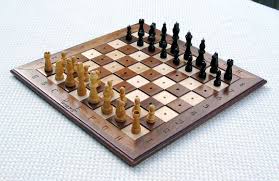
CHESS


In fact there is the interesting story of a chess mad father, Laszlo Polgar, who was also a trained psychologist, who had a theory that genetics did not determine genius, practice did.
Over a period of time, Laszlo Polgar had three daughters and gradually introduced each of his daughters to the game. He set out specifically to prove his ‘practice makes genius’ theory and, as the girls gradually developed a love of the game he provided the opportunity for them to learn and develop as expert players.

Over the years they became better and better so much so, that Susan (Zsuzsanna) Polgar, his oldest daughter, became the first female chess Grandmaster. She further became the winner of 4 World Championships, 5 Olympics and the ONLY (male or female) person to win the chess championship Triple Crown.

PURPOSEFUL PRACTICE

So, if we are looking to have footballers develop into becoming experts, evidence seems to point to the fact that they need AT LEAST 10,000 hours practice. This is not just a kick-about we are talking about though, this is purposeful practice, remember; practice designed, determined and intended to bring about improvement.
In Syed’s book, as an example, he ventures to suggest that Tiger Woods spends longer on practising his bunker shots than the average player spends on developing their whole game.

CHOICE

However, rather than us coaches determining that the young players whom we serve NEED the practice to become an expert, I believe that it should be about the individual having the opportunity if they choose to become the best they can be,
We should strive to provide the best environment we can so that they develop the love of and passion for the game and ignites the desire to become a champion. Where we are unable to fuel that desire, we should try to provide the help and guidance needed so that they can find the right route to their aspirational vision.

NOW, HERE’S A THOUGHT....

What about the coaches?

I started to look at this 10,000 hour rule and discussed it with a friend of mine who is an A licence coach, FA Tutor and a qualified teacher.
I realised that, as a grassroots coach, I have been coaching (and studying, researching and attending courses of various kinds) in an effort to become a better coach for 20 years now.

So, on the back of an envelope, I did a quick calculation of how many hours I had spent actually coaching with a desire to improve. I believe I have always been quite good at reviewing sessions with a view to improvement of my own performance as a coach as well as the session itself.

So, taking account of courses (on which you plan and deliver sessions to the other candidates) and the various clubs/teams for which I have coached over the years, I tallied up that I have probably achieved around 1,500 hours ACTUAL coaching practice. In 20 YEARS !! That is hardly even beginner level in the great scheme of things and certainly wouldn’t be even close to making me an ‘expert’ coach.
I’m not sure if I should have taken account of the reading, research and DVD / video tape watching…..and I’m not sure if I should casually mention to my wife that I need to get another 8,500 hours of practical coaching (as soon as possible) in order to achieve ‘expert’ level !!